What a 1% Grocery Cart Looks Like: The Smart Grocery Shopping Guide for Sustainable Fat Loss
Sep 21, 2026
No lunchbox. No meal prep. No problem.
If you're a busy professional trying to lose fat, lunch can be one of the hardest meals to manage.
You may not have time to cook in the morning. You may have back-to-back meetings. Your office cafeteria may have limited options. And when you're hungry at 1 PM, opening Swiggy or Zomato and ordering whatever is convenient can feel like the only realistic choice.
But eating a high-protein lunch at work doesn't require carrying a lunchbox every day.
The key is learning how to upgrade the food you're already eating.
Instead of trying to find the "perfect diet meal," use a simple approach:
Keep the food you enjoy. Add enough protein. Choose better cooking methods when possible. Manage portions.
Here are some realistic ways to do it.
Protein is an important part of a fat-loss diet because it helps you maintain muscle while losing weight and can also make meals more filling.
But getting enough protein becomes difficult when your lunch is primarily made up of rice, noodles, dosa, roti or other carbohydrate-heavy foods.
You don't necessarily need to remove these foods.
Instead, ask yourself:
"Where is the protein in this meal?"
Once you start looking at meals this way, ordering lunch becomes much easier.
Biryani doesn't have to disappear from your diet just because you're trying to lose fat.
The problem with many biryani meals is that the rice portion can be large relative to the amount of chicken you actually eat.
Instead of ordering a large biryani and eating it by itself, try:
Regular chicken biryani + tandoori or grilled chicken + plain curd
This keeps the meal you enjoy while adding a more substantial protein source.
You also don't need to completely avoid the rice.
The goal is not to make your lunch "clean."
The goal is to make it more balanced and easier to fit into your overall diet.
Don't remove your favourite food. Add what the meal is missing.
Chicken fried rice is another common office lunch.
Instead of having chicken fried rice alone, consider adding:
Chicken fried rice + grilled or tandoori chicken
Another option is a chicken rice bowl with extra grilled chicken.
This gives you a simple way to increase the protein content of your lunch without needing to prepare anything yourself.
Again, you don't need to eliminate rice.
If you're trying to lose fat, the total amount of food you eat matters, so keep your portion appropriate and make sure the meal has a good protein source.
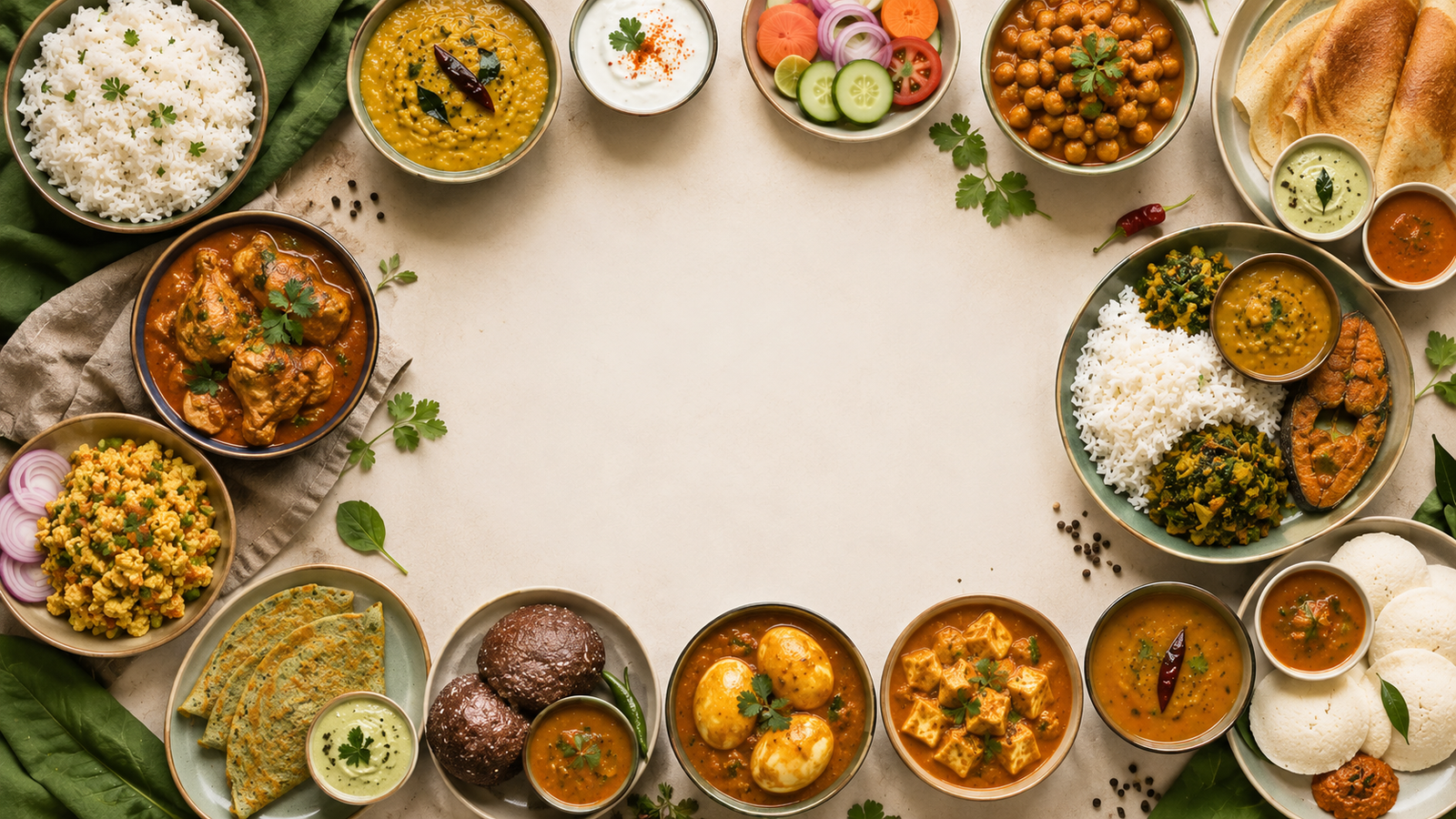
If your workplace cafeteria mainly serves South Indian food, you can still build a high-protein lunch.
For example, instead of:
3 dosa + chutney
Try:
2 dosa + 2–3 boiled eggs
Or choose:
Rice + dal/sambar + 2 boiled eggs + vegetables
The idea is simple.
Dosa and rice can remain part of the meal. You're simply adding a stronger protein source and, when available, vegetables.
You don't need a completely different menu.
You just need to make the available menu work better for you.
If you're vegetarian, you can use the same principle.
Instead of having paneer fried rice alone, consider:
Paneer tikka + dal + rice or roti
Another option:
Paneer curry + dal + vegetables + rice or roti
When possible, favour grilled or roasted paneer over heavily fried preparations.
The goal isn't to eliminate paneer dishes or carbohydrates.
It's to build a meal that contains a meaningful protein source alongside your main food.
Sometimes the cafeteria simply won't have a good protein option.
That's when having a few convenient foods at your workplace can make things much easier.
Some practical options include:
Greek yogurt
High-protein milk
Protein powder
Roasted chana
You don't have to use these every day.
Think of them as a backup plan for days when your normal lunch is low in protein.
For example, if your cafeteria lunch is mostly rice and curry, adding a convenient protein source can improve the overall meal without requiring you to cook.
Small additions can fix a weak meal.
You don't need to memorise dozens of meal combinations.
Whenever you're ordering lunch, use this simple four-step formula.
Choose the food you actually want to eat.
This could be:
Rice
Roti
Dosa
Biryani
Fried rice
A rice bowl
Ask:
"What is my main protein source?"
Depending on your preferences, this could be:
Chicken
Eggs
Paneer
Dal
Curd
Greek yogurt
When you have a choice, favour options such as:
Grilled
Roasted
Tandoori
Steamed
over heavily fried preparations.
You don't have to make this choice perfectly every time.
Just make it more often.
If vegetables or a salad are available, add them to the meal.
This gives you a simple structure:
Main food + protein + vegetables
That's often enough to turn a random office lunch into a much more balanced meal.
This is where many fat-loss diets fail.
They are designed around an ideal lifestyle rather than your actual lifestyle.
If you work long hours, commute, attend meetings and regularly eat outside, a plan that requires you to prepare every meal may be difficult to maintain.
A sustainable approach should account for the reality of your workday.
You don't need to stop eating restaurant food.
You need to become better at making decisions when restaurant food is your only option.
That means knowing how to:
Choose a protein source.
Manage portions.
Prefer better cooking methods.
Add vegetables when available.
And most importantly, avoid turning one imperfect meal into an excuse to abandon your entire plan.
Save these combinations for your next workday.
| What you're ordering | Better option |
|---|---|
| Chicken biryani | Regular portion + tandoori chicken + curd |
| Chicken fried rice | Moderate portion + grilled chicken |
| Dosa | 2 dosa + boiled eggs |
| Rice + curry | Rice + dal + eggs/chicken/paneer + vegetables |
| Paneer fried rice | Paneer tikka + rice + dal |
| Vegetarian meal | Dal + paneer + rice/roti + vegetables |
These aren't "perfect" meals.
They're realistic upgrades.
And that's the point.
Eating well at work isn't about having perfect meals every day.
It's about having a system that works when life gets busy.
You can eat rice.
You can eat dosa.
You can eat biryani.
You can eat restaurant food.
You can eat cafeteria food.
You can still make progress toward your fat-loss goal.
The important thing is learning how to build better meals from the options available to you.
Remember the formula:
KEEP THE CARBS.
CHOOSE A GOOD PROTEIN.
PREFER BETTER COOKING METHODS.
WATCH PORTIONS.
You don't need to carry a lunchbox to eat well.
You need to know how to upgrade the food you're already eating.
If you're a busy professional trying to lose fat without giving up your social life, restaurant meals or the foods you enjoy, focus on building a system you can actually maintain.
Because the best diet isn't the one you can follow perfectly for two weeks.
It's the one you can continue following months and years from now.